Buy deviled.com ?
We are moving the project
deviled.com .
Are you interested in purchasing the domain
deviled.com ?
domain@kv-gmbh.de · 0541-91531010
Buy deviled.com ?
Will the accelerator ever die?
It is unlikely that the accelerator will ever die completely. As technology continues to advance, new forms of accelerators may be developed to replace older ones. Additionally, the knowledge and expertise gained from existing accelerators will continue to be valuable for scientific research and technological advancements. Therefore, while specific accelerators may become obsolete, the concept and use of accelerators in various fields is likely to persist. **
What is a 3D accelerator card?
A 3D accelerator card, also known as a graphics processing unit (GPU), is a specialized hardware component designed to render and display 3D graphics with high performance and efficiency. It offloads the task of rendering complex 3D images and scenes from the computer's central processing unit (CPU), allowing for smoother and more realistic graphics in video games, simulations, and other applications. 3D accelerator cards often have their own dedicated memory and processing power, enabling them to handle the intensive calculations required for rendering 3D graphics. **

Similar search terms for Tan accelerator
Top-Angebote
Products related to Tan accelerator:


-
What is the task Show that tan(x1+x2) = (tan(x1) + tan(x2)) / (1 - tan(x1)tan(x2)) correct?
The task is to prove the trigonometric identity that tan(x1+x2) = (tan(x1) + tan(x2)) / (1 - tan(x1)tan(x2)). This involves using the sum of angles formula for tangent and manipulating the expression to show that the left-hand side is equal to the right-hand side. By simplifying both sides of the equation and showing that they are equal, we can confirm that the identity is correct. **
-
What is the task of proving that tan(x1+x2) = (tan(x1) + tan(x2)) / (1 - tan(x1)tan(x2)) correct?
To prove that tan(x1+x2) = (tan(x1) + tan(x2)) / (1 - tan(x1)tan(x2)) is correct, one would need to use trigonometric identities such as the sum-to-product formula and the tangent addition formula. By manipulating the expressions using these identities, one can show that both sides of the equation are equivalent. It is important to carefully follow the steps of the proof and ensure that each manipulation is mathematically sound in order to confirm the correctness of the statement. **
-
What is the task to show that tan(x1+x2) = (tan(x1) + tan(x2)) / (1 - tan(x1)tan(x2)) is correct?
To show that the equation tan(x1+x2) = (tan(x1) + tan(x2)) / (1 - tan(x1)tan(x2)) is correct, we can start by using the sum formula for tangent, which states that tan(x1+x2) = (tan(x1) + tan(x2)) / (1 - tan(x1)tan(x2)). We can then substitute the values of tan(x1) and tan(x2) into the equation and simplify both sides to see if they are equal. Finally, we can verify the result by checking if both sides of the equation are equal for different values of x1 and x2. **
-
How can I disable the 3D accelerator?
To disable the 3D accelerator on your computer, you can go to the display settings in your operating system and look for the option to disable hardware acceleration or 3D acceleration. In Windows, you can right-click on the desktop, select "Display settings," then click on "Advanced display settings" and then "Display adapter properties." In the properties window, go to the "Troubleshoot" tab and you should find an option to disable hardware acceleration. In macOS, you can go to the "System Preferences," then "Displays," and then "Display" tab to find the option to disable hardware acceleration. Keep in mind that disabling the 3D accelerator may affect the performance of certain graphics-intensive applications and games. **

How do I build a particle accelerator?
Building a particle accelerator is a complex and highly specialized task that requires a team of experts in physics, engineering, and technology. The process involves designing and constructing a large vacuum chamber to contain the particles, creating powerful magnets to steer and focus the particle beams, and developing sophisticated control systems to manage the accelerator's operation. Additionally, safety measures and radiation shielding are crucial considerations. It also requires a significant amount of funding and resources. Overall, building a particle accelerator is a highly challenging and technical endeavor that requires a multidisciplinary approach and substantial investment. **
Can you apply sunscreen on tanning accelerator?
Yes, you can apply sunscreen on tanning accelerator. Tanning accelerators are designed to help your skin produce more melanin, which can help you tan more quickly and with less sun exposure. However, it's still important to protect your skin from harmful UV rays by using sunscreen. Applying sunscreen on top of tanning accelerator can help provide an extra layer of protection and reduce the risk of sunburn and skin damage. **
Top-Angebote
Products related to Tan accelerator:
-
Uresim Solar Accelerator Lotion for Tan 100mL SPF50A facial cream. This moisturizing formula features Carotolino, a powerful antioxidant ingredient rich in beta-carotene, ensuring your skin is protected from harmful solar radiation while promoting a beautiful, golden tan. The lotion has a lightweight texture that absorbs easily, making application a breeze.15,95 £*Shipping: 5,34 £Secure redirect to the provider
-
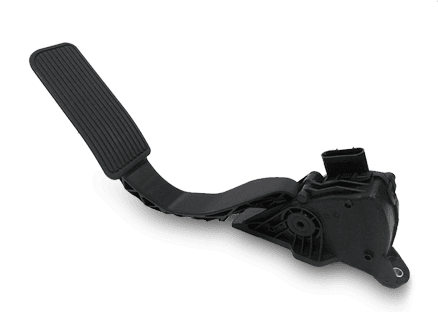
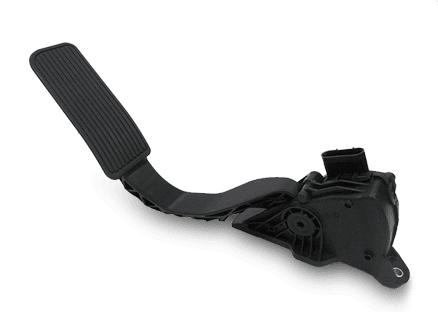
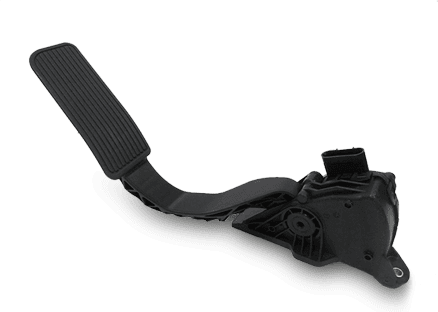
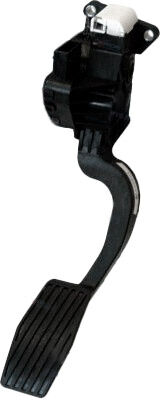
AIC 77944 Accelerator PedalTransmission Type: Manual Transmission; Left-/right-hand drive vehicles: for left-hand drive vehicles; Supplementary Article / Supplementary Info Info 2: with sensor; Number of pins: 6; Guarantee: 5 years guarantee or up to 75,000km; Vehicle Identification Number (VIN) from: 1J-XB044 158, 1J-XD091 224, 1J-XP072 545, 1J-XW180 710, 6X-Y-000 001; Model Year to: 2014; for PR number: G0K, G0L, VF0, 1N2; for combined PR number: F6G+G0C, 1A1; Vehicle Equipment: for vehicles with accelerator pedal sensor; Production date to: 04.11.201360,99 £*Shipping: 8,45 £Secure redirect to the provider
-
Will the accelerator ever die?
It is unlikely that the accelerator will ever die completely. As technology continues to advance, new forms of accelerators may be developed to replace older ones. Additionally, the knowledge and expertise gained from existing accelerators will continue to be valuable for scientific research and technological advancements. Therefore, while specific accelerators may become obsolete, the concept and use of accelerators in various fields is likely to persist. **
-
What is a 3D accelerator card?
A 3D accelerator card, also known as a graphics processing unit (GPU), is a specialized hardware component designed to render and display 3D graphics with high performance and efficiency. It offloads the task of rendering complex 3D images and scenes from the computer's central processing unit (CPU), allowing for smoother and more realistic graphics in video games, simulations, and other applications. 3D accelerator cards often have their own dedicated memory and processing power, enabling them to handle the intensive calculations required for rendering 3D graphics. **
-
What is the task Show that tan(x1+x2) = (tan(x1) + tan(x2)) / (1 - tan(x1)tan(x2)) correct?
The task is to prove the trigonometric identity that tan(x1+x2) = (tan(x1) + tan(x2)) / (1 - tan(x1)tan(x2)). This involves using the sum of angles formula for tangent and manipulating the expression to show that the left-hand side is equal to the right-hand side. By simplifying both sides of the equation and showing that they are equal, we can confirm that the identity is correct. **
-
What is the task of proving that tan(x1+x2) = (tan(x1) + tan(x2)) / (1 - tan(x1)tan(x2)) correct?
To prove that tan(x1+x2) = (tan(x1) + tan(x2)) / (1 - tan(x1)tan(x2)) is correct, one would need to use trigonometric identities such as the sum-to-product formula and the tangent addition formula. By manipulating the expressions using these identities, one can show that both sides of the equation are equivalent. It is important to carefully follow the steps of the proof and ensure that each manipulation is mathematically sound in order to confirm the correctness of the statement. **
Similar search terms for Tan accelerator
-
What is the task to show that tan(x1+x2) = (tan(x1) + tan(x2)) / (1 - tan(x1)tan(x2)) is correct?
To show that the equation tan(x1+x2) = (tan(x1) + tan(x2)) / (1 - tan(x1)tan(x2)) is correct, we can start by using the sum formula for tangent, which states that tan(x1+x2) = (tan(x1) + tan(x2)) / (1 - tan(x1)tan(x2)). We can then substitute the values of tan(x1) and tan(x2) into the equation and simplify both sides to see if they are equal. Finally, we can verify the result by checking if both sides of the equation are equal for different values of x1 and x2. **
-
How can I disable the 3D accelerator?
To disable the 3D accelerator on your computer, you can go to the display settings in your operating system and look for the option to disable hardware acceleration or 3D acceleration. In Windows, you can right-click on the desktop, select "Display settings," then click on "Advanced display settings" and then "Display adapter properties." In the properties window, go to the "Troubleshoot" tab and you should find an option to disable hardware acceleration. In macOS, you can go to the "System Preferences," then "Displays," and then "Display" tab to find the option to disable hardware acceleration. Keep in mind that disabling the 3D accelerator may affect the performance of certain graphics-intensive applications and games. **
-
How do I build a particle accelerator?
Building a particle accelerator is a complex and highly specialized task that requires a team of experts in physics, engineering, and technology. The process involves designing and constructing a large vacuum chamber to contain the particles, creating powerful magnets to steer and focus the particle beams, and developing sophisticated control systems to manage the accelerator's operation. Additionally, safety measures and radiation shielding are crucial considerations. It also requires a significant amount of funding and resources. Overall, building a particle accelerator is a highly challenging and technical endeavor that requires a multidisciplinary approach and substantial investment. **
-
Can you apply sunscreen on tanning accelerator?
Yes, you can apply sunscreen on tanning accelerator. Tanning accelerators are designed to help your skin produce more melanin, which can help you tan more quickly and with less sun exposure. However, it's still important to protect your skin from harmful UV rays by using sunscreen. Applying sunscreen on top of tanning accelerator can help provide an extra layer of protection and reduce the risk of sunburn and skin damage. **
* All prices are inclusive of VAT and, if applicable, plus shipping costs. The offer information is based on the details provided by the respective shop and is updated through automated processes. Real-time updates do not occur, so deviations can occur in individual cases. ** Note: Parts of this content were created by AI.